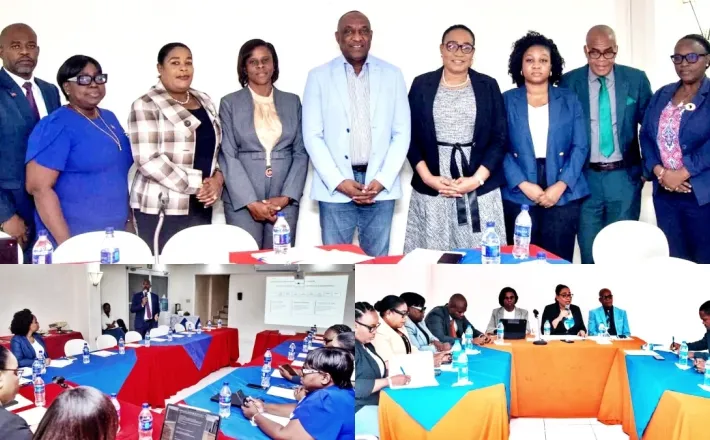
On Monday, September 14, 2026, at the Hotel Montana in Pétion-Ville, the Ministry of the Status of Women launched a series of consultations with political parties and groups aimed at strengthening women's participation in the upcoming elections.
Held under the theme "For at least 30% female participation in the electoral process: political parties commit alongside the Ministry," this first day of consultations brought together representatives from several political entities, including Konbit Nasyonal (KONA), represented by former Senator Joseph Lambert; the *Organisation du Peuple en Lutte* (OPL), represented by former Deputy Ketel Jean Phillipe; as well as representatives from the DEBLOKE party, LAPEH, and the An Avan Pou Ayiti group.
In her opening remarks, the Minister of the Status of Women, Pedrica Saint Jean, welcomed the mobilization of representatives from political parties and groups and emphasized the importance of their commitment to increasing women's participation in political life. She notably highlighted that women's access to decision-making spheres is a crucial factor in strengthening democracy and national representation.
Attorney Mosler Georges then gave a presentation on the new electoral decree and its key provisions designed to foster women's participation. The session provided an opportunity to examine twelve key articles of the decree, highlighting the opportunities available to women as well as the responsibilities of political parties and groups regarding the identification, support, and guidance of female candidates.
Discussions also focused on the strategies to prioritize for facilitating the identification, registration, positioning, and protection of female candidates. Participants identified several persistent obstacles to their political participation, notably the difficulties in recruiting female candidates, insufficient financial and logistical support, insecurity, and the weight of social perceptions that continue to limit women's access to positions of political responsibility.

Hear from women leading change in the political space share their experiences and insights.

Explore a wide-range of audio-visual resources on key topics of gender equality.

Hear from a diverse list of panelists and guests as they reflect on critical issues pertaining Women in Politics.